
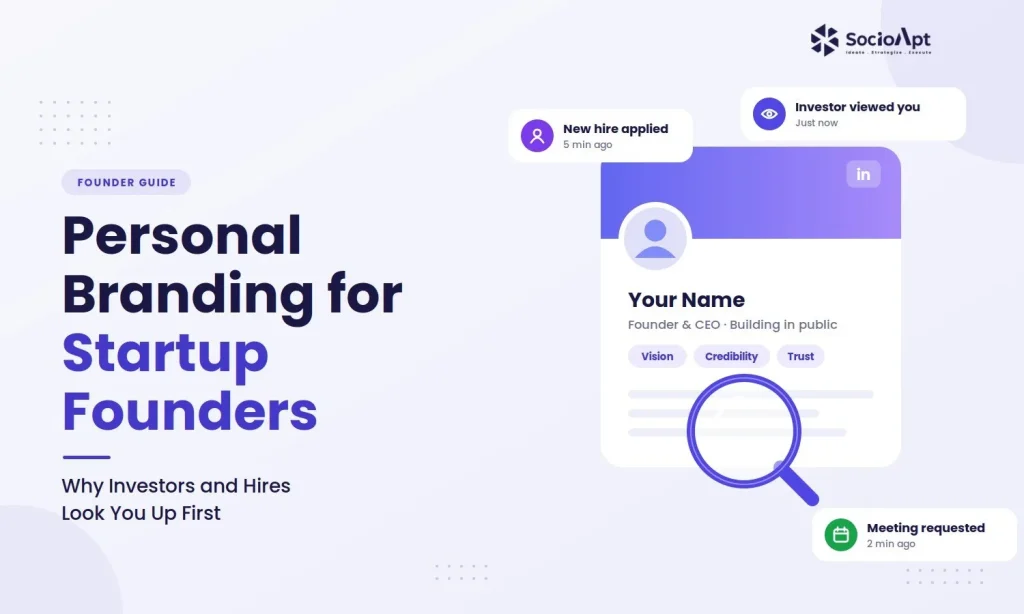
It is not enough to have a great idea or to manufacture a high-quality product. People will want to know who the person behind the company is. The presentation of oneself in social networks becomes relevant in the case of startups, when investors, future employees and potential business partners want to find out more about the founders before agreeing to a meeting or taking into account a job offer from them. The concept of personal branding becomes very relevant when it comes to the creation of business. Personal branding gives one an additional chance to convey certain values, to express one knowledge and to gain credibility even before having direct contact.
Personal branding strategy helps to attract attention only of those people who are really interested in what one does and what one represents as a person.
Why People Are Interested in the Founders of Startups
Besides assessing the quality of the product or services provided, people tend to learn more about the founders themselves and their business management style.
- Investors: would be interested in whether the founder of the business is aware of the market and has a certain vision regarding the further development of the company.
- Potential employees: may be influenced by the management style and values of the founder when considering joining the team.
- Future customers: would need to ensure that the business understands their needs and will meet the expectations.
- Online presence: The importance of an online image can also not be overlooked as the professional profile on LinkedIn plays an important role when people assess their potential partners.
- Trust: It takes time to gain people’s trust but having a completed LinkedIn profile with appropriate content will definitely help with that.
Personal Brand Strategy for Founder Trust Building
One cannot create a personal brand by making posts everyday or mentioning all accomplishments of the business. A good personal brand implies consistent messaging and vision of the person. Personal brand strategy is essential for determining what impression founder wants to make on its audience and what would it take to do so. Personal brand strategy will link personal experience of the founder to business aims thus giving a direction to the communications conducted via Internet.
If we take the example- founder that works in finance technology may consider an expert in making complicated financial processes simpler for the business. Other founder may concentrate on sustainability of products and business practices. In any case, content and profile of the founder should reflect this experience.
Reasons Why an Investor Might Want to Look at the Founder Online Presence
There are many things that investors look at before deciding to invest in a company. This includes not only the business model and the market opportunity but also the experience of the founders and their ability to make things happen. However, the online presence of the founder may be included into this list. They might want to see what the professional history of the person looks like and also understand how good the founder is at articulating the purpose of the company and the problem that they are solving. That said, it doesn’t mean that investors need a perfect founder with thousands of followers on social media. What is important is whether the online presence of the founder is actually reflective of their knowledge and experience.
Why Founders Are Important for Potential Employees
There can be many valid reasons why one may choose to work for a particular start-up. One could decide to work for a company operating under the conditions that are different from what one can find in an already existing firm, and the duties will be different too. One can think that it is vital to understand what kind of direction the company will take and who will lead it. Information about a founder that can be found on the Internet may provide some insight into the firm and its values. It may be good to know what are the goals that the founders have and how much they value their employees. One who is experienced in making tough decisions may seem more real to candidates. The most important thing is not to confuse personal branding with leadership skills.
Personal Branding and Self Branding – What Should Founders Focus On?
Personal and self branding have something in common with the image of the founder as viewed by others.
- Highlight your strengths: It means that the founder has to show actual skills and experience, not the invented image.
- State your values: State what values and principles you use while doing business.
- Consistent online presence: The content of your LinkedIn page should reflect the strengths and convey the message.
- Establish your credibility: Founders have to prove their credibility, for example- ensure that your claims are supported by your professional experience. Otherwise, your credibility will be damaged.
- Talk about the experience learned: The discussion of the lessons learned will help to connect with other people better.
- Use your own voice: There is no need to be like other founders – speak about your experience in your own words.
The key aim of the founders is to develop professional image based on reliable information and communication. You do not have to know everything – you just have to be open about your experience and lessons.
How to Build a Personal Brand That Reflects Your Business
There is no need to apply complex tactics and create continuous content in order to establish a personal brand. There are some basic techniques that will work well towards making you convey your authority. Startup founders looking to strengthen their professional identity can read this guide on how to build a personal brand from scratch for guidance on creating a personal brand that reflects their expertise and business vision.
1. Define the areas that you would like to get associated with
It is important to know the area that you are experienced in. Find out the issues that your business faces, along with the skills that you have gained in the field. While one entrepreneur would want to be perceived as the person responsible for development and expansion of the company, others may prefer showcasing their technology or customer service skills. It will make it much clearer what to share online.
2. Communicate something about yourself through your LinkedIn profile
Your LinkedIn profile will be one of the first things people will check when seeking to find out something about you as a founder. This is why your LinkedIn page must convey the key aspects about you and your expertise. The communication of the message is done through the use of the headline, the About section and other information that you add to the profile.
3. Share your ideas, not just promotional posts
Sometimes it happens that founders’ activity on social media is reduced to sharing the launch dates and updates on their company’s activities. However, such posts are not necessarily enough to make followers interested in you and your account. Instead, share with your audience your ideas and approaches to tackling certain situations in your work area. It might be your experience with mistakes made by businesses or insights you gained from particular experiences.
4. Make people see the unique nature of your persona
Apart from demonstrating professional and expert nature of your image, you can demonstrate your real personality as well. As a founder, you can share all your experiences and lessons from those. In addition, you can mention the factors that prompted you to open a business and the changes you plan to make within the industry. However, you do not need to tell people everything from your private life. It is only necessary to provide some useful information regarding the background of your company.
5. Try to be consistent, though do not post too often
Personal branding presupposes regular contacts; thus, being busy with making posts and being silent during several months can be counter-productive for you. Find the schedule suitable for your routine. It may be helpful to post some interesting information once a week and participate in some related discussions. Thus, the conditions for professional networking will be created.
Common Personal Branding Mistakes Startup Founders Should Avoid
Personal branding is a continuous activity that calls for consistency and time. Below are some pieces of advice for founders that will help you keep being credible and trustworthy when creating your personal brand.
- Imitating other founders: When you copy the style of content creation of others, your personal brand becomes unoriginal. Instead, talk to your audience about your experience and your opinion.
- Being concerned only about the number of your followers: A lot of followers does not mean that you will gain trust or future business deals. Concentrate on contacting the investors and customers that you need.
- Promoting your business all the time: Sales talks are boring for your audience. Instead, make posts with ideas and experience gained by you as an entrepreneur.
- Making a statement without proof or lying: You will lose credibility if you will make a statement which cannot be checked or if you will lie.
- Making an ideal persona: Everyone makes mistakes and everyone learns from failures and successes. Share this knowledge with your audience.
- Not using your unique experience and point of view: You are unique and you have your unique experience. Use it in your posts and videos.
How SocioApt Can Help Founders Strengthen Their Personal Brand
Development of the company takes much time and effort from the founders. Most of them have good positioning but cannot produce content on a regular basis because of their daily tasks. SocioApt will assist founders in creating an authentic personal brand according to some strategy.
- Defining the positioning of the personal brand: Learn what special features the founder has to position correctly.
- Optimization of the LinkedIn profile: Improve the headline and about part of the profile to make people understand the background and the goals of the founder.
- Production of valuable content: Create valuable content that will prove your knowledge and ideas.
- Style of communication: Develop your style of communication on the LinkedIn and other platforms for doing business.
- Establishing credibility: Share your real experience in the field to build your credibility among potential partners and customers.
With the right personal brand strategy founders can communicate their expertise more confidently without spending too much time deciding what to post. SocioApt helps bring structure to this process so founders can focus on building their businesses while developing a professional presence that reflects their goals.
THE BOTTOM LINE
Investors and potential employees always want to know who the person behind a startup is before putting their faith in the business or joining the team. A founder’s online reputation can give them a better understanding of the individual and create an initial impression. Having a strong personal brand strategy enables founders to share their expertise and philosophy without constantly promoting themselves. By using personal branding and self branding effectively, founders can showcase their values and what they bring to their field of expertise. SocioApt helps founders strengthen their personal brand and build a credible online presence that reflects their vision and professional experience.
Frequently Asked Questions
1. What is personal branding for startup founders?
It is the practice of shaping how investors, future hires, and customers see you. It covers your profile, your posts, and the story you tell about why you build what you build. Done well, it makes your strengths easy to see before anyone speaks to you.
2. Why do investors look up founders first?
Early-stage products change often, so investors back the person first. A quick search shows how you think and communicate. It also helps them spot red flags early. A clear online presence answers these questions before you say a word.
3. Why do future hires look up founders first?
Good candidates have many offers. They want to know who they will work for before they reply. Your online presence shows them your vision, your style, and how you talk about your team.
4. What is a personal brand strategy?
It is a plan for how you want to be known and where you will show up to earn that reputation. It has three parts: your message, your audience, and your channels. You do not need a big budget. You need focus and steady effort.
5. How long does self branding take to show results?
Most founders see early signals around the fourth month if they stay consistent. Watch for inbound messages from investors or candidates and for people mentioning your content in meetings.