
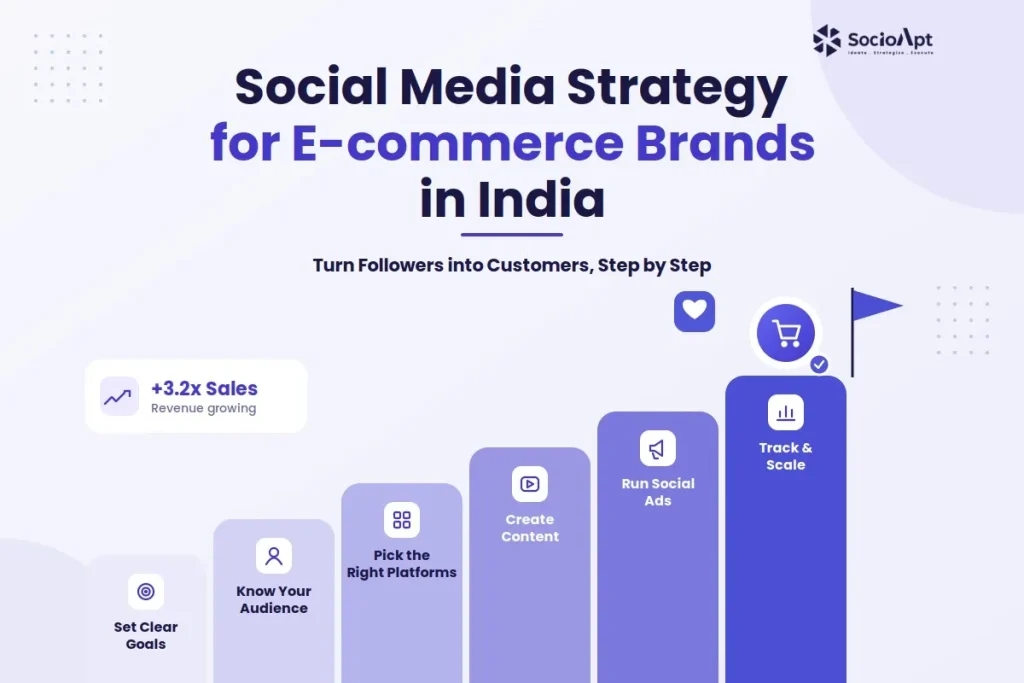
How frequently do you buy something online? Most likely, you discover the product on your Instagram Reels or saw how someone used the product in their video or your friend gave you the link to this product or maybe you read the customer reviews while scrolling some social media site. For most Indians, it’s these small things that matter when they choose a product. The role of social media in customer interaction is more important than ever. Customers visit social media to learn more about the product and compare it with other similar products. Then they read the customer reviews before purchasing anything. There arises a chance for e-commerce companies to interact with clients even before they reach the website.
What should be mentioned here is that posting pictures of your products doesn’t bring any results. You need a Social Media Strategy that will reach your target audience and build a relationship. It is important to know which social media sites your customers visit and what kind of content attracts them.
Why Social Media Matters for E-commerce Brands in India
The consumers using online service providers in India are diverse in many ways. The diversity among the consumers may arise due to various factors such as age, location, language and behaviour. What is applicable to one brand for example in clothing is not applicable in another brand like electronic products. Social media allows online e-commerce firms to communicate with their consumers through the provision of information that is relevant to them.
Relevance of social media in marketing:
- Brand awareness: Through continuous supply of relevant information, clients become aware of the existence of a particular brand.
- Customer Interaction: The customers raise inquiries regarding the cost and specifications of a product through the comments section or private messages.
- Purchase Comfort: Demonstration of the product and product testimonials help to enhance purchase comfort.
- Website Traffic: The posts in social media channel the customer to the product page.
- Loyalty Among Customers: Relevant and relatable information creates loyalty among customers.
It is not always that social media will result in a sale every time. At times a consumer needs to be known to the product several times before they make up their mind about whether to buy or not. It is therefore important for companies to concentrate on creating trust.
1. Understand Your Target Audience Before Choosing a Platform
One needs to know the target audience well in order to create an effective social media strategy. One must analyze the typical consumer first before developing the content.
For example, if a brand of clothes wants to target college students, it might be useful to create short styling videos as well as inexpensive outfits. In case of a high-end furniture brand, detailed images and videos that demonstrate how these products fit into actual interior design spaces are necessary.
An Indian brand of e-commerce also needs to take into consideration regional preferences. People from various regions have different language and cultural preferences. It can be helpful to create content based on local festivals and daily situations in order to create more relatable content.
There are several simple questions one can ask oneself:
- Who would be most interested in my products?
- What problems are my products solving?
- Which social media channels are used by my target audience?
- What questions are asked before buying my products?
- Why are my products unique compared to others
2. Choose Social Media Platforms That Suit Your Brand
Every social media platform gives a different purpose. Instead of trying to maintain an equally active presence everywhere focus on the channels that match your products and audience.
Use of Instagram for Marketing Products Visually
Instagram can be quite effective for fashion and beauty companies as well as food companies and home décor businesses. Reels could feature the usage of the product while Stories could inform about the arrival of a limited-time offer. Carousels could be used to highlight features of the product or compare different products.
For instance, a skincare company may post a video that demonstrates how to use the product. The apparel retailer could highlight different outfits from one dress.
Facebook for Community and Customer Engagement
Facebook can help brands reach different age groups and build communities around their products. It can also support paid advertising and customer interaction.
Brands can share product updates and customer stories or answer common questions through posts. Facebook advertising may also help businesses reach people based on relevant audience characteristics and campaign settings.
YouTube for Detailed Product Content
YouTube is useful when customers need more information before buying. Product examples and comparison videos explain features that may not be clear from a photograph. An electronics brand could create a video comparing two models while a home appliance business could show how a product works in everyday situations.
WhatsApp for Customer Communication
WhatsApp will help with customer engagement and updates about orders in the context of consent being obtained. Questions regarding products can be answered and catalogue details shared in this regard. The idea here is not to be everywhere. The idea is to be where your customers are. If you are figuring out where your audience spends their time, social media marketing can help you focus on the platforms that matter.
Other platforms to Consider
In addition, business may also consider using Reddit, Quora, and Twitter, as well as other social media sites, based on the needs of their target audience. Reddit would enable business to understand what customers are saying about their products and engage in relevant groups, Quora helps business answer queries regarding their products and Twitter could be used for many other purposes.
3. Create Content That Helps Customers Make Buying Decisions
Users do not like advertisements when they are flooded every time they enter their social media account. Consumers require relevant and useful information. Here comes the need for an ideal content strategy. The main goal of content creation on social media is to satisfy all the consumer’s doubts and to show how well the product fits.
Content strategy consists of:
- Product videos – demonstration of how to use a particular product and what its key features are.
- Customer reviews – sharing customer feedback with consent.
- Behind the scenes posts – giving insights on how products are produced or packed.
- Educative posts – answering all the common questions about your products.
- Product styling and usage tips – suggesting various ways of how your products can be used.
For example, an Indian home decor brand could produce a video of decorating a tiny living room on a tight budget and demonstrate how its cushions or wall art could fit there. This would be much more beneficial for e-commerce social media marketing since customers receive some informative material instead of advertisements.
4. Use Social Commerce to Make Shopping Easier
Social commerce is purchasing products through social media experience or a social network to drive customers towards purchase decisions. This may involve product tagging and product cataloguing, as well as messaging and links to the company store. The use of social commerce by Indian e-commerce companies could lower the efforts needed from customers during the purchasing process. Let us consider an example of a Reel where a shoe is shown. In case the post includes product tagging and links to its product page then the buyer can easily find out the pricing and available size information.
This can be achieved by doing the following:
- Using correct product name and description
- Ensuring that prices and availability of products are up-to-date at all places they are mentioned
- Linking relevant products to their product pages
- Providing answers for size and delivery-related queries promptly
- Making sure that the checkout experience is smooth on mobiles
Companies need to verify which shopping tools are available to them in India. The main idea is simple–help customers move from interest to purchase with as little confusion as possible.
5. Work With Influencers Who Match Your Brand
Influencer marketing can benefit e-commerce companies when they try to advertise their products through the people who would listen to the creator recommendations. Having many subscribers does not mean that the right influencer was chosen.
It might be possible that the creator with fewer subscribers would perform better with certain types of products. In other words, the regional fashion bloggers will suit customers looking for ethnic clothing while the sports bloggers will do great in advertising sportswear.
When choosing the influencer, the following factors should be considered:
- If the target audience of the influencer corresponds to your target one
- The credibility and relevance of the content of the creator
- The reaction to the sponsored posts of the creator
- If the creator can provide you with the correct explanation of your product
- If the price of the campaign is affordable
Provide the creator with all the necessary information about your product but give them space to create the content in their own style. It is necessary to make an official statement regarding the partnership. The efficiency of the marketing activities should be reviewed based on the number of clicks and the use of discount codes.
6. Plan Content Around Indian Festivals and Shopping Seasons
The occurrence of festivals and seasons of heavy sales provides a chance to create good strategies for e-commerce business in India. Festivals such as Diwali, Raksha Bandhan, Eid, and others might have an impact on consumer behaviour and preferences. The marketing campaign during festivals should not be just an offering to celebrate and a code for discount. It should meet customers’ needs. For example, a clothing company might provide recommendations on clothes to wear during a holiday party a gift shop could make gift lists for different budgets and a furniture company could give some advice on how to prepare a house for holidays. Campaigns should be started far ahead in order to develop relevant creative materials and make sure that the products advertised will be delivered on time.
7. Use Paid Social Media Ads With a Clear Goal
While organic posts may assist in developing relationships with customers, advertising posts could be used in achieving some other objectives of the company. Prior to launching an ad campaign, one should clarify its objective. Would you like to sell products or generate traffic to the website? Or, would you like your customers to be informed about some new product collections?
The objective will dictate how you develop your campaign and measure its success.
In order to improve the effectiveness of your campaigns you could:
- Choose a creative that will include visuals that will convey the main benefits of your product
- Develop the message that will address the needs of your target audience
- Distribute campaigns between different segments of your target audience
- Test messages and creatives through A/B testing
- Control the progress of your campaigns and budget distribution according to the performance
Do not pay for ads since some posts received a lot of likes and views. Engagement does not equal sales. Think of the entire customer experience when measuring the effectiveness of your campaigns.
8. Measure the Results of Your Social Media Strategy
A social media plan needs regular review. Without measurement it can be difficult to understand which activities are contributing to business goals. The metrics you track depends on the purpose of campaign.
| Goal | Metrics to Monitor |
| Brand awareness | Reach and impressions |
| Content engagement | Comments and shares and saves |
| Website visits | Link clicks and sessions from social media |
| Sales | Purchases and conversion rate |
| Advertising performance | Cost per purchase and return on ad spend |
| Customer service | Response time and common customer questions |
Use platform analytics and website analytics tools to understand how people interact with your content. Where possible use campaign tracking links to identify the traffic and sales for specific campaigns. Remember that not every post will produce the same results. A product video may generate sales while an educational post may help build trust. Both can be useful when they support the wider business strategy. Reviewing previous month top and bottom posts before planning the next one also helps and this social media planning shows how to build that review into every planning session.
Common Social Media Mistakes E-commerce Brands Should Avoid
Sometimes even a carefully planned campaign can fail due to neglecting simple aspects. For example-
- Sharing posts only about promotions without including any helpful information.
- Trying to copy competitors without taking your target audience into account.
- Following trends that aren’t suitable for your brand.
- Not addressing feedback from clients.
- Focusing on follower numbers rather than the objectives of your business.
- Sharing products without considering availability and logistics.
- Posting without having an aim.
By avoiding these, your brand will be able to keep a more relevant online presence. An effective strategy does not have to mean that every post should become viral.
The Bottom Line
Creating an effective social media account requires more than frequent posting. E-commerce Indian brands should know their consumers and provide them with useful content. The Social Media Strategy combines all these activities. It provides brands with guidance on creating useful content and implementing social commerce and advertising campaigns. The best way is to start with defined audience and limited content strategy. Track the results and be attentive about consumer feedback. With growing knowledge, one will be able to develop e-commerce social media marketing strategies better and establish strong connections with future buyers. SocioApt helps companies enhance their social media presence with effective positioning and marketing services.
Frequently Asked Questions
1. What will be the social media strategy of the e-commerce companies?
Social media strategy means the strategy which will use social media platforms such as Instagram and Facebook to reach out to the customers and market the products. This strategy will include details about the target audience and the strategy used in order to accomplish the objective of the campaign.
2. What social media platform will be suitable for the Indian e-commerce companies?
This will depend on the product and target audience. If the product is a visual product then Instagram will prove useful whereas YouTube can help in explaining the product in detail.
3. Define social commerce and explain its role in online stores’ operations.
Social commerce is the combination of social media functions and buying goods or services. Product tagging and access to the online shop could facilitate the users’ acquaintance with some products and increase the likelihood of purchase.
4. How often should you post on social media as an e-commerce brand?
There is no golden rule for posting frequency that would be applicable for every business. You should establish a schedule that your team can follow and focus on creating valuable content constantly. You could use sales statistics to come up with your posting frequency.
5. How does the brand measure the effectiveness of its social media marketing strategy in an e-commerce environment?
The results of their efforts could be analyzed in the form of the company’s reach and engagement, traffic on their website, and sales. The effectiveness of the advertising campaign can also be measured through the cost-per-purchase ratio and return on ad spend.
6. Can one use influencer marketing for small e-commerce businesses?
Sure, they can. Small brands can work with creators who have an audience that would match their products and target audience. It is more important for the content to be relevant and the audience to be engaged rather than the size of the audience.