
It is one of the most searched questions small business owners ask before committing time and money to social media. And it deserves a straight answer instead of the usual “it depends.”
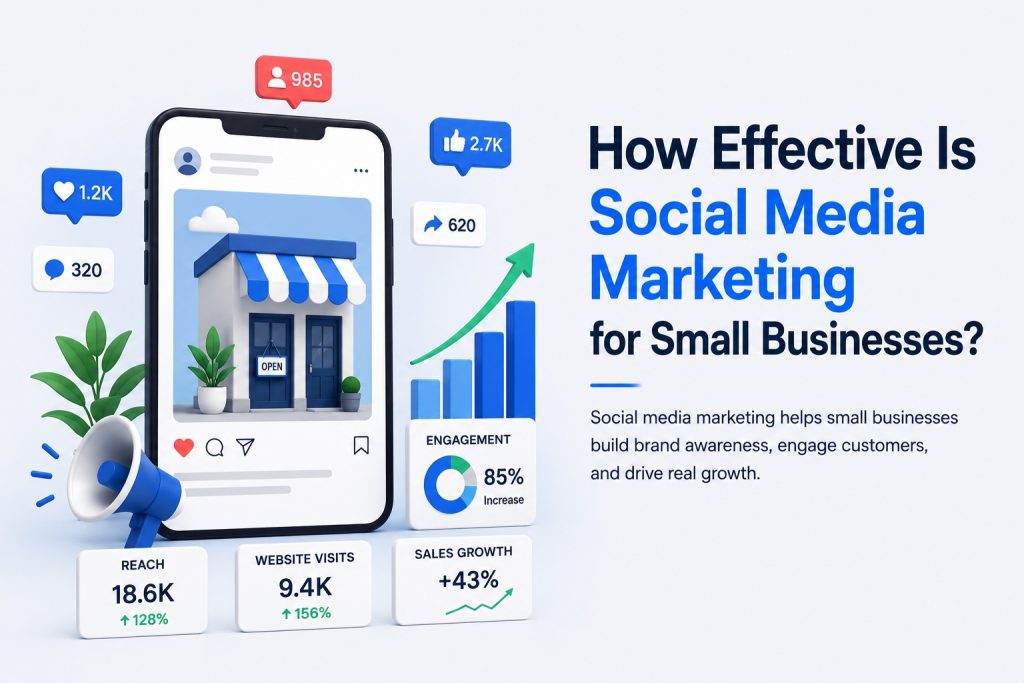
The truth is social media marketing is highly effective for small businesses. But only when it is done with a clear strategy, the right platform, and consistent execution. Small businesses that tick those boxes consistently see real results: more enquiries, more website traffic, more customers, and a brand that people actually recognize and trust.
The ones that struggle are usually doing one of three things: posting randomly without a goal, trying to be everywhere at once, or giving up before the results have had time to compound.
This blog breaks down exactly how effective social media marketing is for small businesses, what it actually helps with, and what small business owners need to know to make it work.
What the Numbers Actually Say
Before getting into the detail, here is what the data tells us about social media and small business marketing.
According to Statista, over 5.2 billion people used social media globally in 2024, with the number continuing to climb in 2026. HubSpot research shows that 77% of marketers say social media marketing has been somewhat to very effective for their business. Meta’s own data shows that more than 90 million small businesses use Facebook alone to connect with customers.
The numbers on consumer behavior are even more telling:
- 54% of social media users research products on social platforms before making a purchase (GlobalWebIndex)
- 71% of consumers who have a positive experience with a brand on social media are likely to recommend it to others (Ambassador)
- Businesses that maintain an active social media presence generate 2x more leads than those that do not (HubSpot)
- 78% of consumers say a brand’s social media posts influence their purchase decisions (Forbes)
These are not numbers from large enterprise brands with million-dollar marketing budgets. These are patterns in how real people, including your potential customers, use social media every single day to discover, evaluate, and decide which businesses to spend their money with.
How Social Media Marketing Actually Helps Small Businesses
Understanding that social media is effective is one thing. Understanding specifically what it helps with gives you a much clearer picture of where to focus.
It Builds Brand Awareness at a Cost Traditional Marketing Cannot Match
For a small business owner, the most important thing social media does is make you visible to people who did not know you existed.
A consistent presence on even one platform means your business shows up in feeds, searches, and recommendations regularly. Over months of consistent posting, that visibility compounds. People start recognizing your name before they ever need your product or service. When they do need it, you are already in their mind.
The cost of that visibility through traditional channels: print ads, radio spots, direct mail, is usually thousands of dollars per campaign with no guarantee of reaching the right people. The cost of building that same awareness through consistent organic social media content is time.
What small business brand awareness on social media looks like in practice:
- A local cleaning company posts before-and-after content three times a week on Instagram. Within four months, people in their area tag them in posts asking for recommendations because they have seen the account enough times to associate it with quality results.
- A freelance accountant posts weekly tax and finance tips on LinkedIn. Within six months, corporate contacts start recommending them to colleagues because the content positioned them as the most visible and credible expert in their network.
- A new coffee shop posts daily behind-the-scenes content on TikTok. One video of their latte art process gets 40,000 views. Their first-week foot traffic exceeds the projection for month three.
None of these required paid advertising. All of them required showing up with specific, useful, real content consistently.
It Generates Leads and Enquiries Directly
Social media is not just a brand awareness channel for small businesses. It is a direct lead generation tool when it is treated as one.
The path from social media content to customer enquiry is shorter than most small business owners realize:
- A potential customer sees your post in their feed
- They visit your profile and scroll through your content
- They read your bio, check your testimonials or highlights, and decide you look credible
- They send a DM asking about pricing, availability, or how to get started
- That conversation becomes a booking or a sale
This entire journey happens inside a single platform, often within minutes of someone first discovering you. No website visit required. No phone call needed to start. The friction is almost zero compared to any other marketing channel.
Instagram DMs, Facebook Messenger, LinkedIn messages, and TikTok comments are active lead generation channels for small businesses in almost every industry. A local personal trainer, a wedding photographer, a home renovation company, and a B2B consultant can all generate consistent enquiries through social media content alone when their profiles are set up properly and their content speaks directly to what their ideal customer needs.
For an honest look at whether social media translates those enquiries into actual sales revenue, this detailed breakdown of does social media marketing really increase sales goes into the data and the real-world mechanics.
How Important Is Social Media Marketing for Small Business Owners Specifically
For small business owners, social media marketing is not just another marketing channel. It is often the most accessible, most affordable, and most direct-feedback channel available.
Here is what makes it specifically important for small business owners rather than just businesses in general:
You are the brand as much as the business is
Customers of small businesses often choose a business because of the person running it. Social media gives small business owners a direct platform to show their expertise, their personality, their values, and their story. This is something large corporations cannot replicate. When the owner of a bakery shares the story behind a new recipe, or a consultant shares a hard lesson they learned with a client, that personal connection builds trust faster than any amount of polished brand content.
You can move faster than your bigger competitors
A large brand’s social media content goes through multiple rounds of approval. You can decide to post something this afternoon and have it live in five minutes. That speed is a genuine competitive advantage. You can respond to trends, local events, and customer comments in real time in ways that bigger competitors cannot.
Your customer relationships are your biggest asset
Small businesses grow on relationships and referrals more than any other factor. Social media scales that relational advantage. A customer who follows you, engages with your content, and sees regular updates about your work is more likely to refer you, return themselves, and leave a positive review than one who visited once and never heard from you again.
The learning curve actually works in your favor
Because you know your business, your customers, and your community better than any agency or marketing team could, the content you create will always be more authentic and specific than what a disconnected third party produces. That authenticity is exactly what social media rewards.
Where Small Businesses See the Strongest Return
Not all types of social media marketing deliver equal results for all small businesses. Here is where small businesses consistently see the strongest return on their time and investment.
Local service businesses (cleaning, landscaping, plumbing, beauty, fitness, dental, food)
These businesses benefit most from Instagram and Facebook because their customers are visual and local. Before-and-after content, customer testimonials, and location-tagged posts consistently generate local enquiries at very low cost. Google also indexes Facebook and Instagram profiles, meaning an active social presence strengthens local search visibility alongside a Google Business Profile.
E-commerce and product businesses
Instagram Shopping, TikTok Shop, and Pinterest Shopping make social media a direct sales channel for product businesses. Short-form video showing the product in real use, honest reviews from real customers, and UGC content from buyers consistently outperform traditional product photography in conversion. Product businesses that invest in TikTok and Instagram content alongside these native shopping features see social media become a significant revenue channel within six to twelve months.
Professional service businesses and consultants
LinkedIn content marketing delivers the strongest returns here. Consistent posting of specific, expert-level insights positions a consultant or professional service provider as the most visible authority in their niche. Decision-makers who have followed your content for months before they have a relevant need will come to you rather than searching for someone new because the relationship is already warm.
B2B businesses targeting other small businesses
A combination of LinkedIn content and Facebook community participation works well here. Showing up consistently in the spaces where your target customers spend time, contributing real value to discussions, and then making your own expertise visible through your profile content creates a steady flow of warm enquiries over time.
The Honest Reality: When Social Media Marketing Does Not Work for Small Businesses
Social media marketing is not universally effective. There are real reasons why some small businesses invest time and see nothing. Being honest about those reasons is more useful than overselling the channel.
Posting without a clear audience in mind
Generic content that could apply to any business attracts generic attention, which means low engagement, low saves, and no meaningful growth. The small businesses that see the strongest results post content written for a very specific person with a very specific problem. The narrower the audience, the more powerfully the content resonates with exactly that person.
Inconsistency
Social media results compound over time. A business that posts consistently for three months and then goes quiet for six weeks resets most of the momentum they built. The algorithm deprioritizes inactive accounts. Followers disengage. Starting over repeatedly produces nothing. A modest posting schedule maintained consistently beats an ambitious one abandoned after a month.
Mismatched platform and audience
A B2B software company putting most of its effort into TikTok and a teenage-facing streetwear brand putting most of its effort into LinkedIn are both doing the right thing badly. Platform choice has to follow the audience, not personal preference or where competitors happen to be.
Measuring the wrong things
Follower count is not a business metric. A small business with 800 engaged, relevant followers who regularly enquire and buy is in a stronger position than one with 15,000 passive followers who never click, never message, and never spend. Measuring engagement rate, profile visits, link clicks, and actual enquiries gives a far more accurate picture of whether social media is working.
Is Social Media Marketing Worth the Time for Small Business Owners?
This is the question behind the question. Small business owners do not have unlimited hours. Investing time in social media means not investing it in something else. Is it worth it?
For the vast majority of small businesses in 2026, the answer is yes, with one condition: you need to approach it as a skill to build and a system to maintain, not a task to check off.
The businesses that get the best return from social media are the ones that treat it like any other business function. They are consistent. They measure results. They improve based on what they learn. They do not expect overnight results and they do not give up when early growth feels slow.
For a more detailed look at how to weigh that decision for your specific business context, this honest breakdown of is social media marketing worth it for businesses covers the trade-offs from multiple angles.
New to Social Media Marketing? Here Is Where to Begin
If you have decided social media marketing is worth pursuing for your business but are not sure where to actually start, the most important thing is to avoid doing everything at once.
Pick one platform. Define one goal. Set up your profile properly. Build a simple content rotation you can stick to for at least three months before adding anything new.
The early months are about building the habit and the baseline, not chasing results. Consistent, specific content for the right audience on the right platform is all you need to begin.
This step-by-step guide on how to start social media marketing for small business walks through each stage in order, from setting your goal to running your first paid campaign.
How to Make Social Media Marketing More Effective for Your Small Business
Knowing that social media works is useful. Knowing what specifically makes it more effective for small businesses is actionable.
Post with a specific person in mind
Before every post, ask yourself: who exactly is this for and what do I want them to feel, think, or do after reading it? Posts written for one specific person perform better than posts written for a general audience.
Lead with specificity
Vague content gets scrolled past. Specific content gets stopped at. “Here are some marketing tips” gets ignored. “Here is the exact email subject line that got us a 58% open rate on a cold list” gets read, saved, and shared.
Show real results, not just claims
Testimonials with specific outcomes outperform generic praise. Before-and-after content outperforms descriptions of what you do. Video of the actual process outperforms a photo of the finished product. The more tangible and real your content is, the more it builds the trust that converts followers into customers.
Engage before and after you post
Spend 15 minutes before you post and 15 minutes after engaging with content from accounts your target audience follows. This signals activity to the algorithm, puts your name in front of relevant people, and builds genuine community connections that eventually translate into followers and enquiries.
Treat your best organic content as the brief for your paid ads
When a piece of organic content performs well, it is telling you something your audience wants to see more of. Running a small paid campaign around that content puts a proven message in front of a larger, targeted audience without the guesswork of creating something new from scratch.
For a step-by-step plan that turns these principles into a real working system, this guide on social media marketing strategies for small businesses builds the full picture.
Want Results Without Doing All of This Yourself?
Building an effective social media presence takes strategy, consistency, and time that most small business owners are already short on.
If you want the results without managing every part of it yourself, our social media marketing services for small business are built for exactly this situation. We handle the strategy, content creation, publishing, and performance tracking so you can focus on running your business while your social media presence grows consistently in the background.
The Bottom Line
Social media marketing is genuinely effective for small businesses. Not as a shortcut, not as a guaranteed overnight result, but as a compounding asset that builds brand visibility, generates leads, earns customer trust, and creates a real competitive advantage over time.
The small businesses getting the strongest results are not the ones with the biggest followings. They are the ones that know exactly who they are talking to, show up consistently with content that serves that person, and treat social media as a long-term investment rather than a quick win.
Start right. Stay consistent. Measure what matters. And give it enough time to work.