
Most small businesses do not have a posting problem. They have an ideas problem.
They sit down to create content, draw a blank, post something generic, and get generic results. The cycle repeats until they give up or outsource.
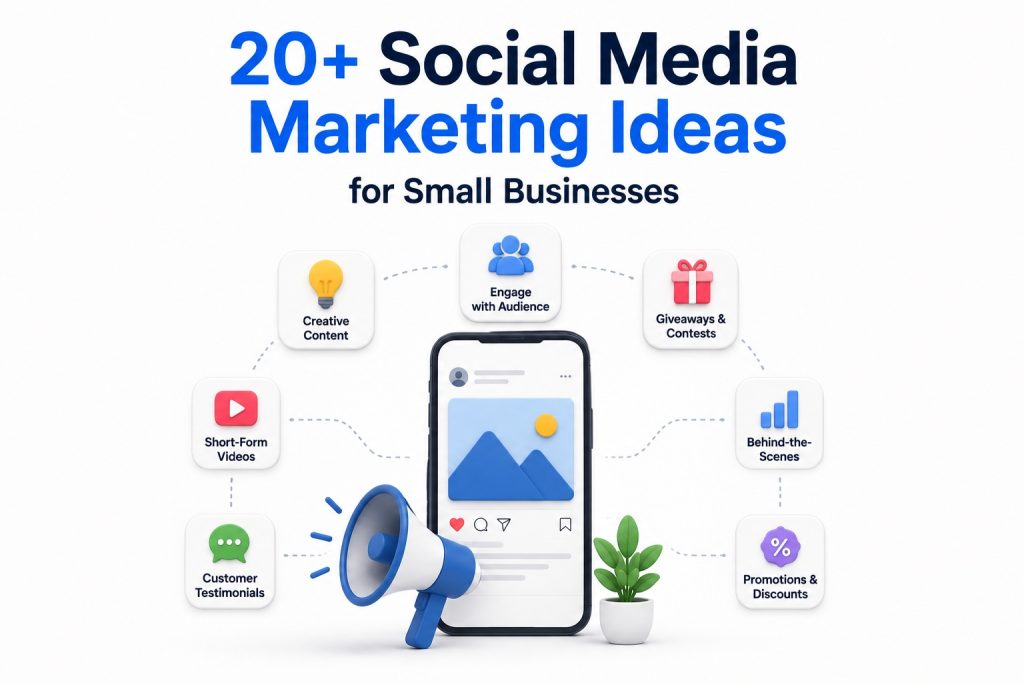
This list fixes that. Below are 25 social media marketing ideas for small businesses that actually work, grouped by what they are designed to do, so you can pick the right type of content for what you need right now.
Ideas That Build Brand Awareness
These posts introduce your business to people who have never heard of you and give existing followers a reason to share you with others.
1. The “Who We Are” post
Tell your origin story in a single post. Not a polished PR version. The real one. Why did you start this business? What problem were you trying to solve? What did the first month look like? People follow people, not logos. A genuine story told in your own voice earns attention and saves that gets shared.
2. Meet the team
Post individual spotlights of the people behind your business. Name, role, one fun fact, and what they bring to customers. These posts consistently outperform product posts in engagement because people are genuinely more interested in other people than in things.
3. Before and after content
Show the transformation your product or service creates. A cleaned yard, a redesigned logo, a styled outfit, a renovated kitchen, a client’s results. Before-and-after posts are the highest-saved content type for most service businesses because people share them with others in the same situation.
4. “A day in the life” content
Walk your audience through a typical working day at your business. Morning prep, the first customer, a challenge you handled, how the day ended. This kind of content builds familiarity and trust in a way that purely promotional posts never do.
5. Milestone posts
First anniversary, 500th customer, new location, hitting a sales goal. Share the wins publicly. Not to brag but to make your audience feel like they were part of it. They were. Their purchases and referrals made it happen.
Ideas That Drive Engagement
These posts are designed to get people commenting, sharing, saving, and responding. Engagement signals to algorithms that your content is worth pushing to more people.
6. Ask a direct question
Post a genuine question your audience has an opinion on. Not “what do you think?” but something specific: “We are deciding between two new menu items. Truffle fries or loaded nachos. Which wins?” Specific questions get answers. Vague ones get ignored.
7. Poll or this-or-that post
Instagram Stories polls, LinkedIn polls, and Facebook post polls all generate strong engagement with minimal effort. “Morning coffee or afternoon coffee?” for a cafe. “Clean lines or maximalist?” for an interior designer. “Train at home or at the gym?” for a fitness coach. Simple, binary, and impossible not to have an opinion on.
8. Caption this
Post a funny or interesting photo from inside your business and ask followers to write a caption. Incredibly simple. Surprisingly effective. People tag friends in the comments and your reach multiplies.
9. Myth-busting content
Pick the most common misconception in your industry and correct it directly. “No, you do not need to post every day to grow on Instagram.” “No, a higher price does not always mean better quality.” “No, you cannot spot-reduce fat with targeted exercises.” These posts generate discussion, shares, and saves because people either agree strongly or want to debate.
10. Fill in the blank
“The one thing every [type of customer] should do before [relevant action] is ___.” Ask your audience to complete the sentence. These work on Instagram, LinkedIn, and Facebook and generate comment threads that keep the post circulating in the algorithm for days.
If you want to build a content system around ideas like these rather than posting reactively, this guide on social media marketing strategies for small businesses shows you how to structure a full approach.
Ideas That Build Trust and Credibility
These posts do the work of convincing someone who has never bought from you that you are the right choice.
11. Customer testimonials and reviews
Take a real review from Google, Yelp, or a direct message and turn it into a post. Quote the customer (with permission), show the result they mentioned, and add brief context about what the project or service involved. A testimonial that includes a specific outcome converts better than a generic “great service” review. “They cut our booking time in half” beats “very professional team” every single time.
12. Case study posts
Walk through a real client result from start to finish. What was the situation before? What did you do? What changed afterward? Keep it tight, use real numbers where possible, and end with a soft call to action. Case studies are the social media equivalent of a portfolio and they rank and get shared consistently.
13. User-generated content reshares
When a customer tags you in a post, reshares your product, or leaves a photo review, share it on your own account with a thank you. This does three things: it rewards the customer publicly, it shows new visitors that real people use and enjoy your product, and it gives you a piece of content you did not have to create yourself.
14. Educational tips your audience actually needs
Pick one specific problem your target customer has and solve it in a single post. Not a vague tip. A specific, actionable one with a real example. “Here is the exact wording we use when a client asks for a discount and why it works.” “Three things to check before signing a commercial lease that most first-time tenants miss.” Useful, specific content gets saved and shared by exactly the kind of people who are likely to buy from you.
15. Behind-the-scenes process content
Show how you do what you do. The prep that happens before a catering job. The mood board process before a design project starts. The quality checks before an order ships. Customers who see the care and work that goes into your product or service before they buy feel more confident in the purchase and more loyal after it.
Ideas That Generate Leads and Sales
These posts are designed to move people from interested to enquiring or buying.
16. Limited-time offer posts
Post a time-sensitive deal with a clear deadline and a direct call to action. “This week only” or “first five enquiries” creates urgency. Make the offer specific and the next step obvious. “DM us the word OFFER to get details” keeps it trackable and generates direct conversations.
17. Product or service spotlight
Pick one specific product or service and dedicate a post to it. Cover what it is, who it is for, what problem it solves, and how to get it. Do not try to cover everything you offer at once. One focused spotlight per post works far better than a menu of options.
18. FAQ posts
Write out the top five questions customers ask before buying and answer them in a single post or carousel. This removes buying hesitation before a potential customer even has to ask. It also positions you as transparent and trustworthy, which accelerates the decision to reach out.
19. Social proof stack
Combine multiple forms of social proof into one post. A short testimonial quote, a stat (“over 200 clients served”), and a before-and-after image. These posts work well as pinned posts or as the first post someone sees when they visit your profile, because they answer the key question every new visitor has: “can I trust this business?”
20. Direct call to action post
Once in a while, just ask. Not every post needs to be soft-sell. “We have two spots left this month. If you have been thinking about booking, now is the right time. Link in bio.” Straightforward, honest, and often the post that drives the most direct conversions because there is no ambiguity about what to do next.
Ideas That Show Your Brand Personality
These posts build the kind of connection that turns followers into regulars and regulars into advocates.
21. Share an opinion
Not a controversial one for its own sake, but a real professional opinion you actually hold. “We stopped offering same-day bookings and it made our service better. Here is why.” Opinions build following. Neutral, non-committal content does not.
22. Celebrate your customers
Feature a loyal customer (with their permission) and tell their story. Why they came to you, what they were trying to achieve, how they are doing now. Customers love being featured. Their networks share the post. And every new visitor who sees it understands immediately what kind of business you are.
23. Post something that made you laugh
Not a meme that has nothing to do with your business. Something genuinely funny that happened in your work. A mistake that became a lesson. A customer interaction that surprised you. Humor that is rooted in your real experience builds more connection than any inspirational quote.
24. Show what you stand for
Share the values that actually guide how you run your business. Why you price the way you do. Why you turned down a certain type of client. What you will never compromise on. These posts attract the right customers and repel the wrong ones, which makes everything downstream easier.
25. Throwback or progress content
Show where you started versus where you are now. The first product photo versus the current one. The original workspace versus today. The first month’s revenue versus now. Progress content is relatable, shareable, and reminds people that behind every business is a person who started from somewhere smaller.
How to Turn These Ideas Into a Consistent System
Having 25 ideas is useful. Having a system that makes sure you actually use them is what drives results.
Pick five to seven ideas from this list that fit your business and your audience. Rotate through them on a weekly basis. Batch your content creation once a week so you are not starting from scratch every day. And look at which types of posts get the most engagement, saves, and profile visits, then make more of those.
If you are an individual or a small team building a personal brand alongside your business, this guide on how to market yourself on social media covers how to position yourself as the face behind the business in a way that builds real trust.
Need Help Creating Content Consistently?
Coming up with ideas is one challenge. Producing good content week after week while running a business is another.
If that is the part you find hardest to keep up with, our content creation services are built for small businesses that know what they want to say but need a team to help them say it consistently and well.
The Bottom Line
The best social media content for small businesses is not the most polished. It is the most specific, the most real, and the most useful to the exact person you are trying to reach.
Pick ideas from this list that feel like you. Try them. See what lands. Build on what works. That is the whole system.